Cooling and heating systems for wineries
Temperature has a direct influence on wine quality. Controlled fermentation and optimal ageing conditions are essential for developing the desired aromas and preventing overly rapid fermentation or wine faults. Whilst white wine fermentation tends to require lower temperatures (12 to 18 degrees to preserve fresh aromas), red wine fermentation ideally takes place at a constant 20 to 30 degrees to develop tannins and body. This is particularly true in climate-controlled wine cellars
Different systems are used depending on the size of the tanks to be cooled. Cooling plates and coils can be used for tanks with a capacity of between 400 and 2,000 litres. For larger tanks, those with a partial double-walled design are recommended: in these, the coolant (water or glycol) flows over a large surface area directly along the tank jacket, thereby ensuring efficient temperature control.
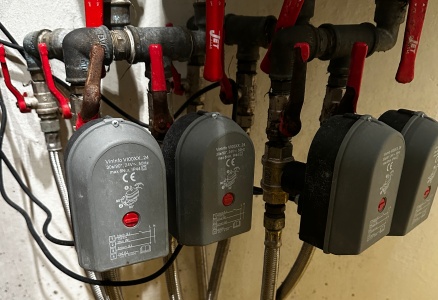
Ideally, the future development of the winery should also be taken into account when planning the temperature control system (e.g. in the event of an upcoming expansion, or by ensuring the cooling unit is sufficiently sized for a cold store designed for the gentle storage of delivered grapes). The individual heating and cooling circuits can be controlled manually (via ball valves) or centrally via a touch panel. Temperature sensors measure the fluid inside, and the control system regulates the heating and
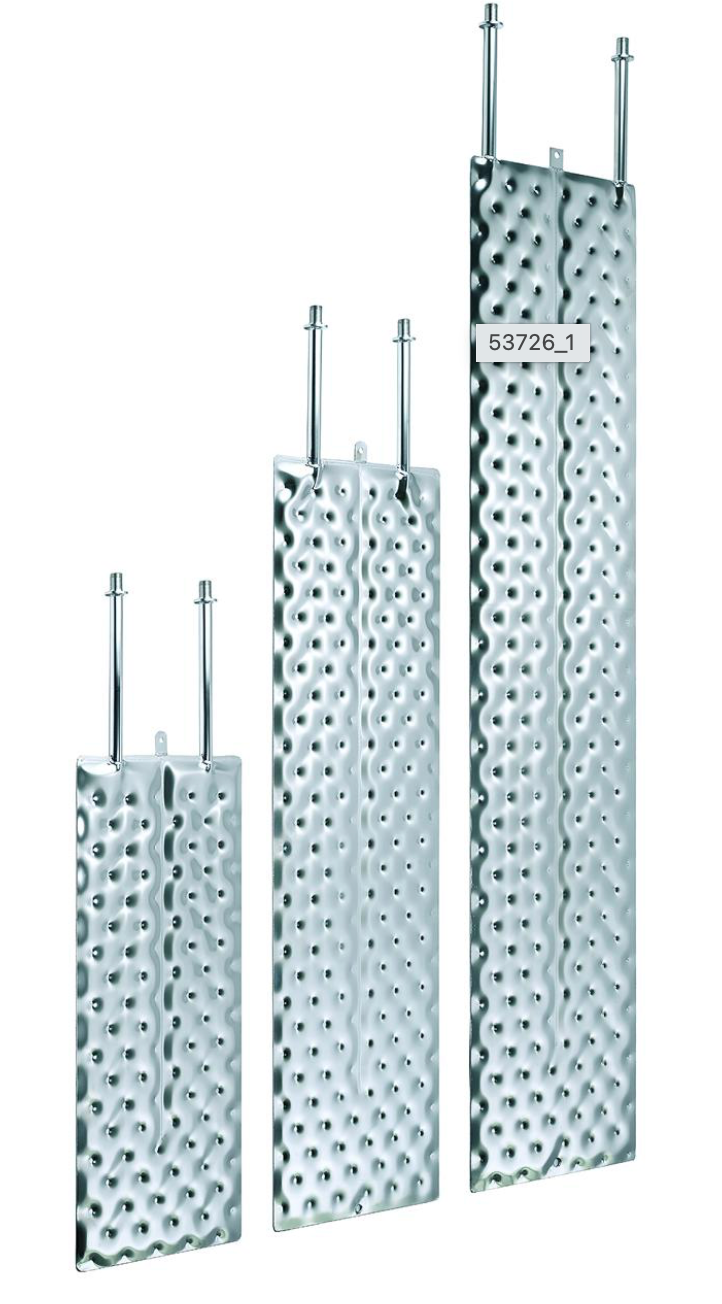
Cooling and heating solutions for tanks ranging from 400 to 2,000 litres
Temperature control for smaller tanks can be achieved using more cost-effective, mobile solutions. WOTTLE ensures that the appropriate access is provided right from the tank construction stage.
Options for cooling/heating smaller tanks
The temperature in smaller tanks with a capacity of 400 to 2,000 litres can be controlled using cooling plates and coil cooling systems. Both systems are also suitable for heating. These cooling and heating methods are used not only in smaller wine-growing businesses, but also for small batches produced separately from the main production run. Cost-effective and portable, they operate flexibly and reliably.
Questions about cooling plates and spiral cooling systems
Cooling plates are made of metal or plastic. They are very simple to use: they are usually filled via the domestic water supply, with a pressure regulator fitted upstream, and are thus cooled to the required temperature (sometimes using a suitable coolant such as glycol). Cooling plates are fitted manually via the dome hatch.
As the cooling plate can also be used to heat the contents of the tank, it replaces the heating element that was previously used. That, too, was simply hung over the dome door, but often caused the yeast in the cake to burn in the immediate vicinity, leading to undesirable changes in flavour. The use of a cooling plate prevents this from happening.
Cooling plates are suitable for temperature control of tank volumes of up to 2,500 litres.
As the name suggests, the spiral cooling system consists of a spiral-shaped metal pipe through which domestic water flows. A pressure regulator is fitted upstream to protect the system from damage. The coil is threaded through the tank’s filling point; due to its rigid design, it is submerged in the tank’s contents. This allows the temperature of volumes of up to 2,000 litres to be precisely controlled.
Cooling plates and spiral cooling systems are generally intended for small-volume applications of up to 2,000 to 2,500 litres. With larger tanks, performance drops rapidly – a coil, for example, would be completely overwhelmed by a 5,000-litre volume, and its use would have no noticeable effect. That is why, for tanks over 2,500 litres, a cooling jacket is definitely the only suitable solution!
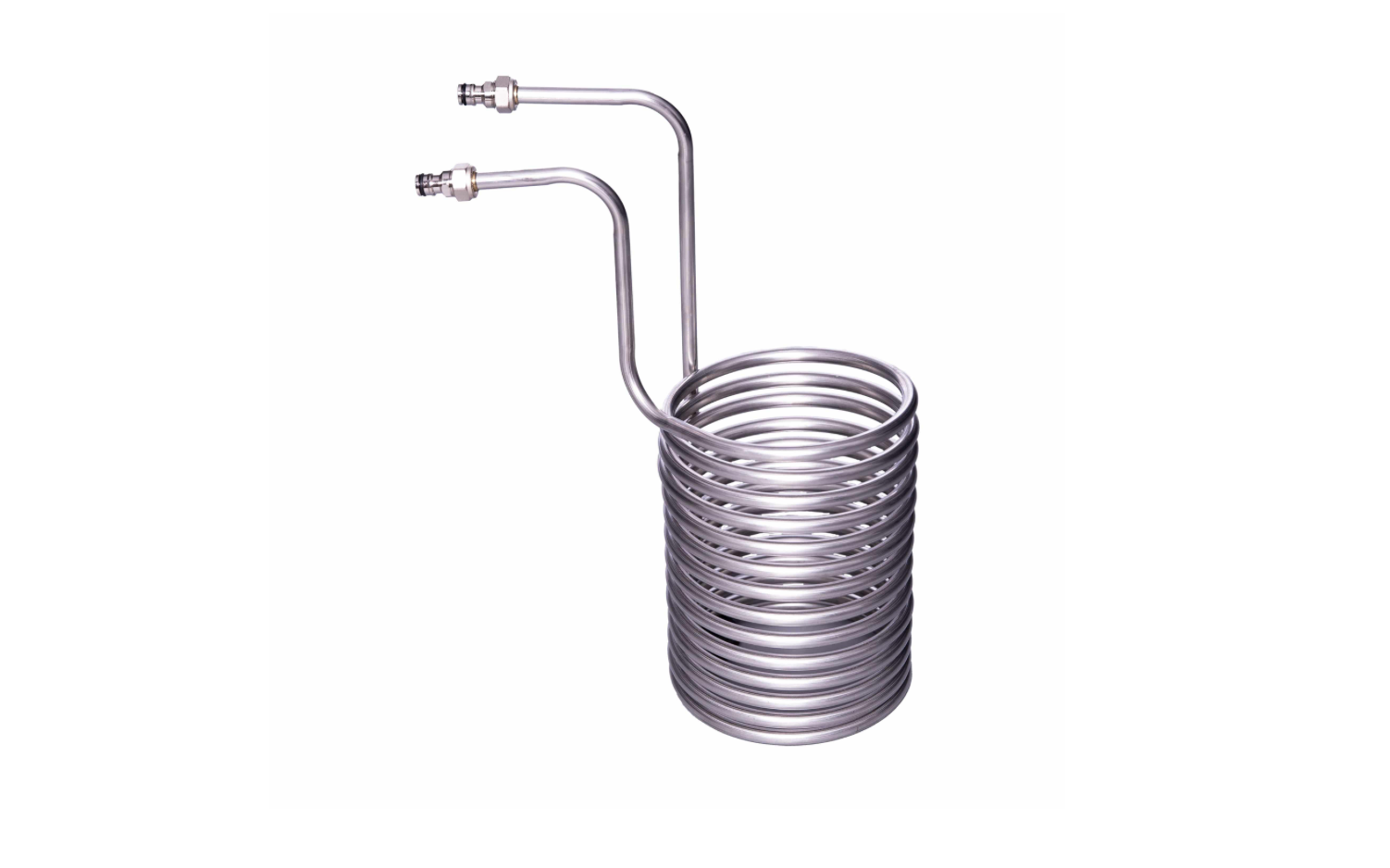
Stainless steel spiral cooler; its rigid construction allows it to be immersed in the tank
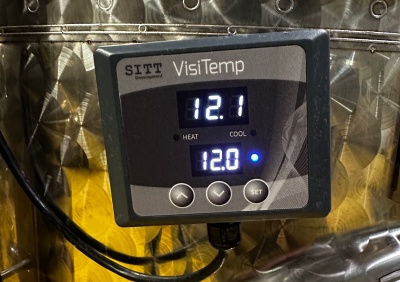
Even with small tanks, fermentation can be controlled by regulating the temperature
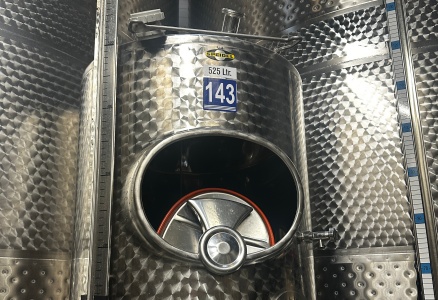
Coils and cooling plates are suitable for tanks with a capacity of up to 2,500 litres
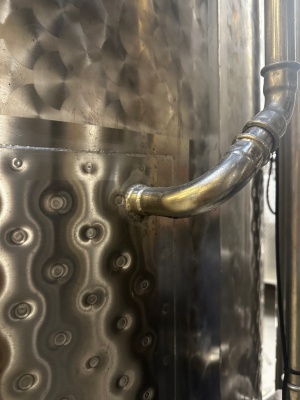
From 2,500 litres: cooling jacket or double jacket
Partial jacket technology is the ideal solution for heating or cooling tanks with a capacity of 2,500 litres or more. The surface area of the heat sinks is calculated based on the tank’s capacity, and water or glycol is supplied via appropriately sized units.
Heating and cooling of large tanks with a capacity of 2,500 litres or more
Temperature control of tank contents using a cooling jacket or double jacket is an ideal, centrally controlled solution for regulating any number of tanks in a winery. To achieve this, a suitably powerful cooling unit is installed and all the tanks are connected to one another in a circuit via cooling pipes.
Questions about heating and cooling using a double jacket
A double jacket essentially consists of a curved sheet metal panel with spot welds, which is fitted to the outside of the tank and welded tightly along the edges. This creates the heat sink in the space between the sheet metal panel and the tank jacket. The coolant (water or glycol) is distributed throughout the heat sink via an inlet and an outlet pipe, with the spot welds determining the distribution pattern within the heat sink.
To ensure adequate temperature control, the cooling and heating surface area usually accounts for 20 to 30 per cent of the tank’s surface area.
The coolant (water or glycol) is supplied by the chiller unit, whilst the units from WOTTLE’s preferred manufacturer also provide heating. Distribution within the hall or cellar is via stainless steel or plastic cooling pipes, which may be insulated to further improve energy efficiency. These main pipes are usually installed on the hall wall at a height above the tanks; the necessary cabling can be routed through a cable duct
Central control is carried out via a touch panel, which displays all the tanks, the target temperature and the information currently measured by the temperature sensors inside the tanks. From here, the solenoid valves fitted on the supply line to the tank can be controlled directly – this allows more or less coolant or heating medium to flow through the double jacket as required.
Alternatively, the inflow and outflow of the double-jacketed pipes can also be controlled manually using ball valves. However, in this case, centralised regulation is not possible.
To ensure that the winery’s temperature control system is fit for the future (in the case of a centralised cooling or heating supply), the unit must be sufficiently sized. There are a number of factors to take into account here, such as whether the entire building is to be supplied or whether a cold store is required for the careful temporary storage of the harvested grapes, etc.
However, the required capacity also depends on the total volume of must or wine to be cooled, the number and sizes of the tanks, the length of the pipework required, the thermal insulation properties of the winery, and much more. Any plans for expansion or refurbishment must also be taken into account to ensure cost-effective planning.
As part of the overall planning process, our technical experts take these details into account and coordinate the design and implementation with the subcontractors.
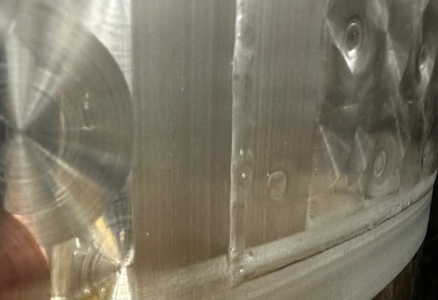
Die Kühlbleche (rechts) werden punkt- und an den Rändern komplett verschweißt
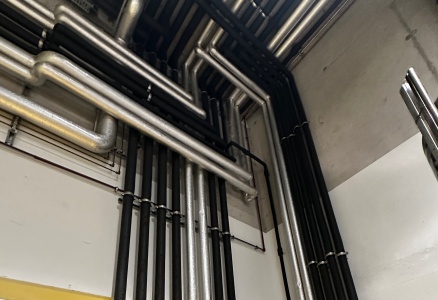
The thermal energy is supplied via a centrally fed cooling circuit