Wine and Must Pumps in Winemaking
At WOTTLE, our approach to winery design and technical consulting is to avoid pumping operations as much as possible in order to preserve the quality of the mash and wine to the greatest extent possible—that is, to prevent foam formation and oxygen exposure. All of this helps prevent the formation of undesirable fermentation byproducts.
Nevertheless, there are times when the use of a wine or mash pump is unavoidable. For these situations, we offer a carefully selected range of pumps from renowned manufacturers that covers all pump technologies: impeller pumps, positive displacement pumps, eccentric pumps, peristaltic pumps, and piston pumps.
Using these available solutions, we develop a concept that meets both the quality and economic needs of the winemakers!
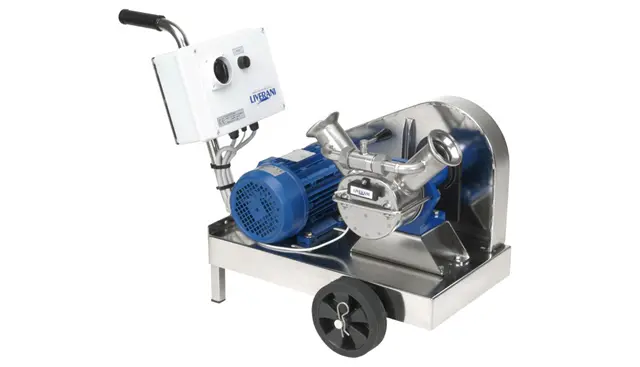
Impeller pumps: ideal for pumping wine and must
An impeller pump is well suited for pumping wine and must in the winery. For pumping mash, we recommend impeller technology only to a limited extent, although the cost factor is a significant consideration.
Impeller pumps for winegrowers: the cost-effective solution
Thanks to the operating principle of the impeller pump, this technology is ideally suited to the transfer of liquids such as wine and must. With an hourly capacity of 12,000 to 50,000 litres, and being self-priming and portable, the impeller pump is a versatile solution for the winery.
Questions about impeller pump technology
An impeller is similar to a propeller housed within a ring-shaped or tubular casing, which enhances performance and efficiency. This effect is achieved because the casing reduces resistance, concentrates energy and minimises losses (comparable to the performance advantage of an aeroplane turbine over a free-standing propeller).
The diameter of the impeller in the pump is greater than that of the inner casing. Made from food-grade rubber, neoprene or silicone, the arms of the impeller bend into elastic blades in this confined space. The rotation creates a vacuum, which causes liquid to be drawn in at one end (self-priming) and, as a result of the flow, generates pressure at the other end, propelling the material further along.
Our impeller pumps offer impressive flow rates at relatively low speeds, ensuring that the fluid is handled relatively gently (for this type of design).
- Hourly output: 12,000 litres
- Speed: 450 rpm
- Motor power: 1.8 PS, 1,400 rpm, 380 V
- Connections: NW 60, NW 80
- Hourly output: 25,000 litres
- Speed: 315 rpm
- Motor power: 3.0 kW, 2 speeds, 380 V
- Connections: NW 80
- Hourly output: 50,000 litres
- Speed: 630 rpm
- Motor power: 3.5 kW, 2 speeds, 380 V
- Connections: NW 80
Impeller pumps are versatile and can be used to transport a wide variety of liquids. With their robust construction and ease of maintenance, they are a reliable component of any winery’s setup.
- Stainless steel version
- mobile and self-priming
- Axial coupling with a speed converter on an electric motor
- Impellers made from food-grade rubber, neoprene or silicone
- low speed for gentle transport
- Available with a control gearbox and bypass system on request
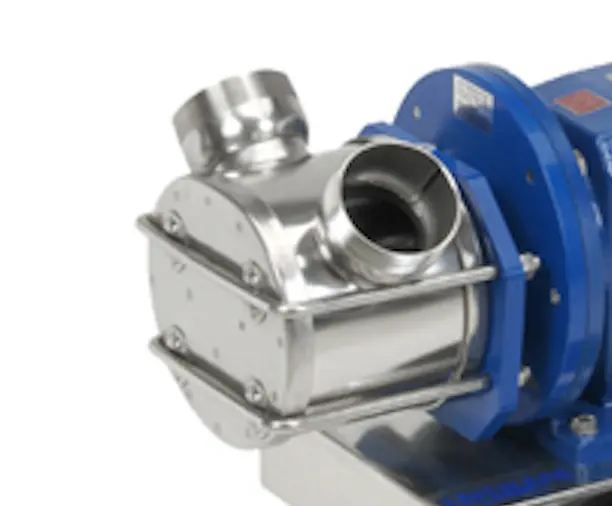
Self-priming impeller system
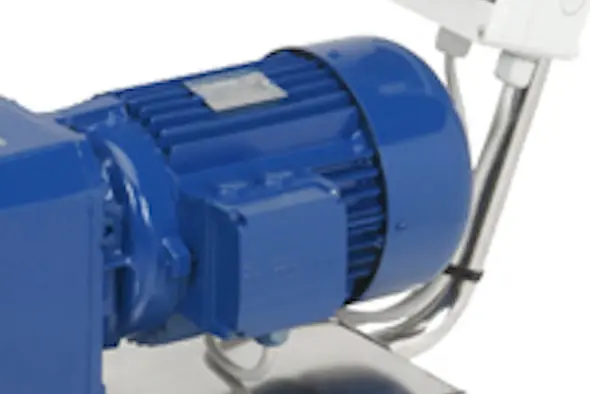
Robust design and easy maintenance
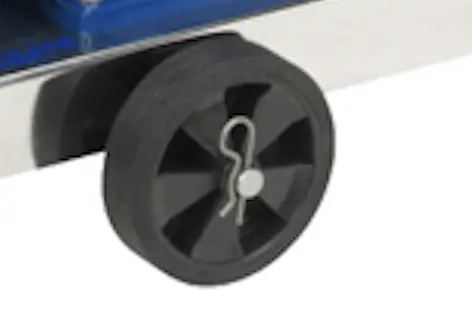
A wheeled, mobile system for versatile use
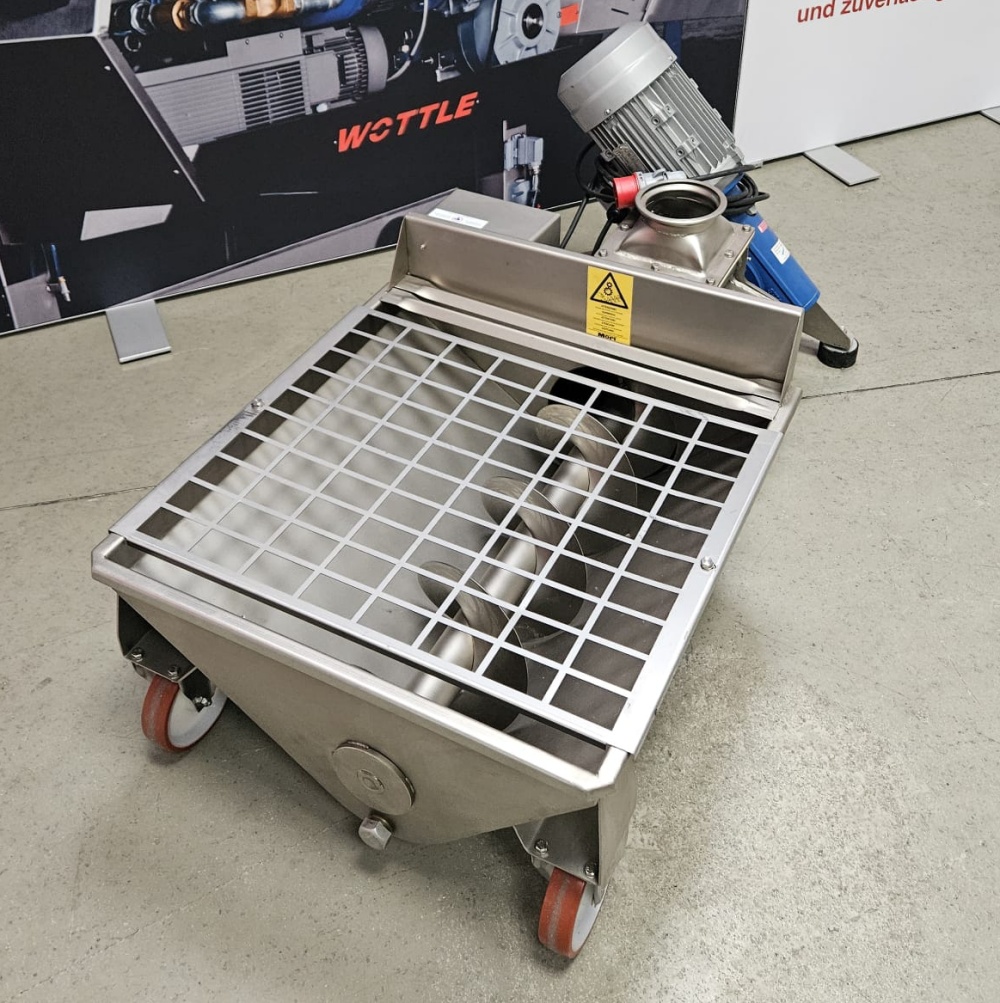
Positive displacement pumps for mash transport
Positive displacement pumps do not convey liquids; instead, they are suitable for transporting mash. The larger the cross-sectional area of the rotating displacement element, the fewer revolutions per minute are required.
Positive displacement pumps in the winery
With pumping capacities ranging from 5,000 to 30,000 kg per hour, positive displacement pumps are a good solution for the gentle conveyance of mash. As this type of pump is not self-priming, the material is fed via an upstream screw conveyor.
Questions about positive displacement pumps
The operating principle of a positive displacement pump is based on a change in volume – specifically, an opposing change on the suction and discharge sides. The enlargement of the chamber on the suction side creates a suction effect, whilst the reduction in volume on the discharge side forces the fluid out (or: the fluid is displaced from the pump’s inlet to its outlet).
This results in a constant flow, making the positive displacement pump particularly suitable for viscous or solids-laden materials. In the winery, transporting mash is one of the tasks for which it is ideally suited.
In the positive displacement pump from WOTTLE, a stainless-steel housing with three chambers rotates. This is available in various sizes, with a larger diameter resulting in gentler conveyance because fewer revolutions per minute are required. Compared with an impeller pump, which operates at between 300 and 600 rpm, a positive displacement pump runs at a maximum of 60 rpm.
A key advantage of a positive displacement pump is that it cannot overheat and requires no lubrication. It delivers a constant flow rate and can also efficiently convey viscous or non-homogeneous materials. In general, positive displacement pumps operate very efficiently and are energy-efficient.
When used in wineries, positive displacement pumps are particularly effective at handling the must gently, thereby preventing the formation of undesirable fermentation by-products.
WOTTLE offers positive displacement pumps in the following capacity ranges, with an inlet pipe diameter of 100 to 120 mm:
- Hourly output: 5,000 kg
- Connection: NW 80/100
- Motor power: 380 V
- Weight: 80 kg
- Hourly output: 10.000 kg
- connection: NW 100
- Motor power: 380 V
- Weight: 130 kg
- Hourly output: 15.000 kg
- Connection: NW 120
- Motor power: 380 V
- Weight: 150 kg
- Hourly output: 30.000 kg
- Connection: NW 120
- Motor power: 380 V
- Weight: 300 kg
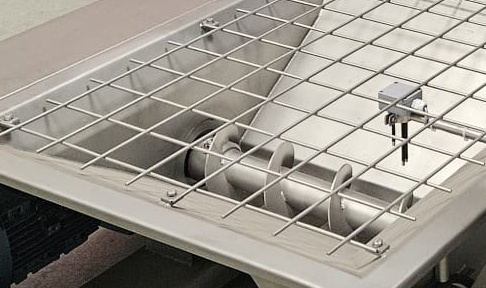
With an upstream screw conveyor for material feed
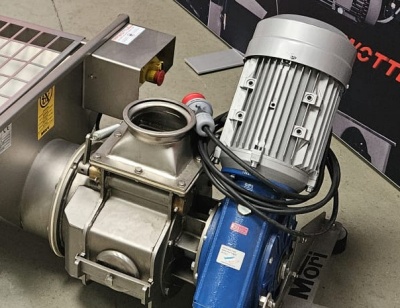
Sturdy construction with a powerful motor
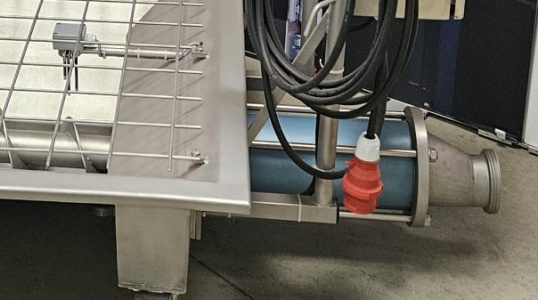
The funnel can also be combined with an eccentric mechanism
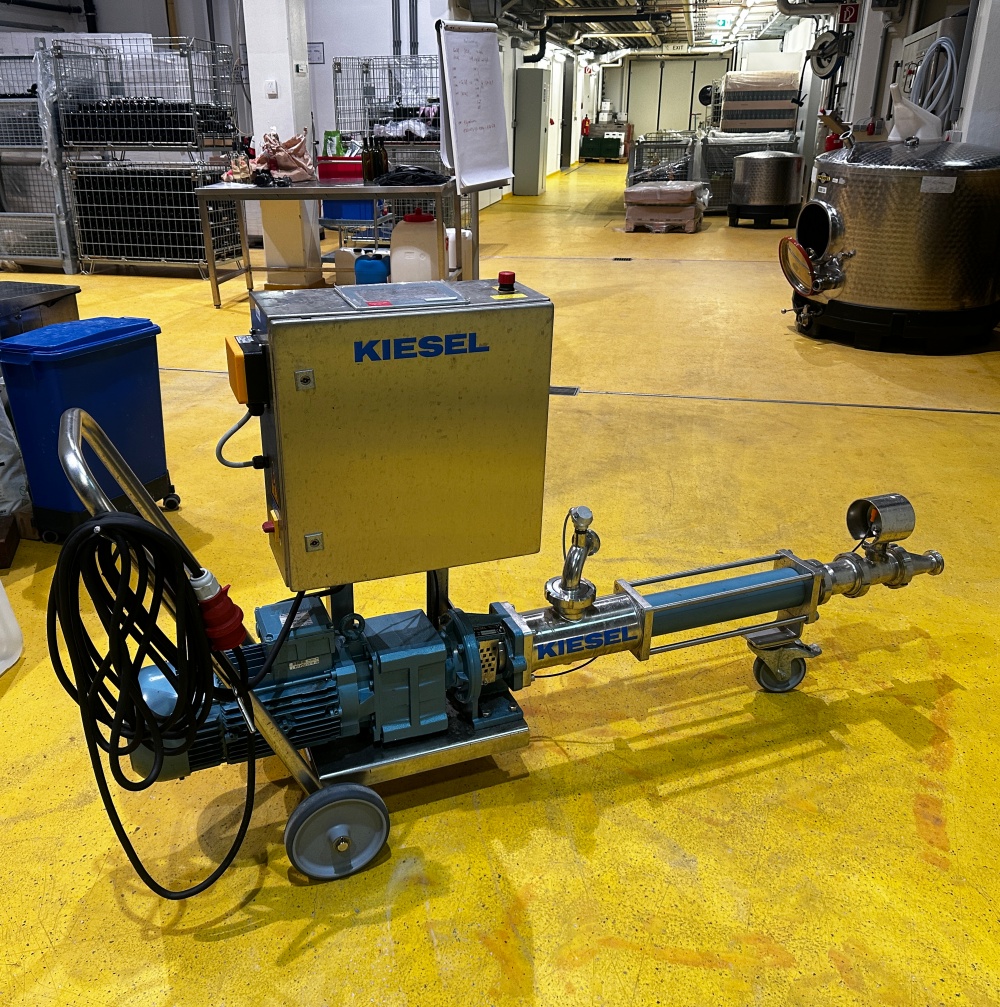
Eccentric screw pumps: gentle and self-priming
With eccentric screw pumps from the renowned manufacturers KIESEL and SCHNEIDER, WOTTLE offers the right solution for every requirement, ensuring that the mash is transported very gently.
The pump essentially consists of a helical rotor made of stainless steel and the stator. The latter is an internal double helix made of rubber. As with the positive displacement pump, the principle of operation here is also based on displacement: the eccentric rotation of the rotor within the stator creates sealed cavities in which the material is transported. To achieve this, the chambers (as with a positive displacement pump) are filled on the suction side and then pushed along the stator towards the discharge side.
The main difference compared to a positive displacement pump is that the eccentric screw pump is self-priming and can draw in material even from lower levels.
The very low shear forces and the low-pulsation conveying characteristics are essential for the gentle transport of the mash, thereby preventing the formation of undesirable fermentation by-products or even the rupture of grape seeds. This is where the largely vibration-free hollow rotor really comes into its own. The flow rate is consistent and can be adjusted directly via the speed – in principle, conveyance takes place at low speeds, which further protects the material being conveyed
With cross-sections ranging from 100 to 120 mm, the ideal conditions for gentle transport can be established, depending on the quantity and properties of the mash.
In general, in addition to the standard models, optional extras such as a top-mounted hopper, a pole-changing motor (6.5/8 kW), infinitely variable speed control, a mixing device and dry-run protection are also available.
Our range of eccentric screw pumps includes:
SCHNEIDER series
- Hourly output: 15.000 bis 20.000 kg
- motor: 7,5 kW
- rpm: 155
- connection: NW 50
- weight: 220 kg
- Hourly output: 20.000 bis 30.000 kg
- motor: 7,5 kW
- rpm: 130
- connection: NW 80
- weight: 245 kg
KIESEL series
- Hourly output: 10 m³
- motor: 4,0 kW
- rpm: 200
- connection: NW 100
- weight: 185 kg
- Hourly output: 15 m³
- motor: 5,5 kW
- rpm: 160
- connection: NW 100
- weight: 257 kg
- Hourly output: 25 m³
- motor: 5,5 kW
- rpm: 250
- connection: NW 100
- weight: 257 kg
- Hourly output: 50 m³
- motor: 7,5 kW
- rpm: 220
- connection: NW 100
- weight: 365 kg
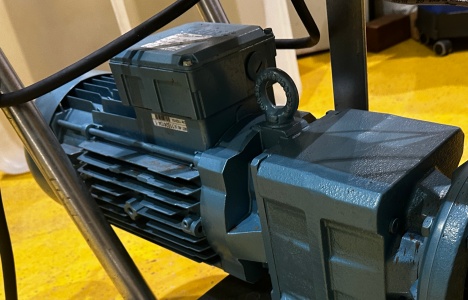
Infinitely variable speed control (optional)
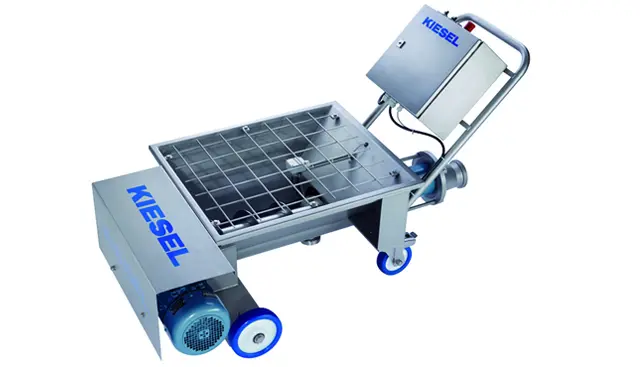
Can be fitted with a top-mounted funnel
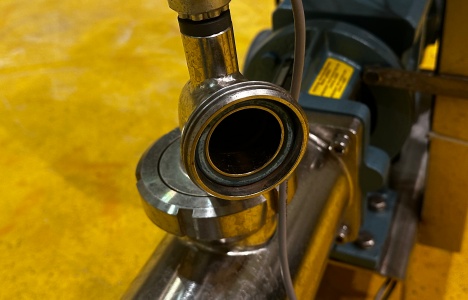
Intake manifold of the eccentric for gentle transport
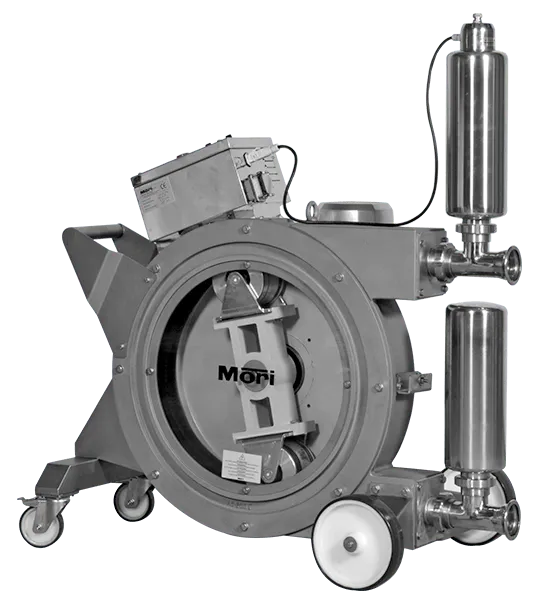
Peristaltic pump: the gentlest possible transport
The peristaltic pump is the absolute cutting-edge technology when it comes to preserving the quality of must, wine and mash!
Peristaltic pump: straight from the world of food technology
With hourly output of up to 20,000 litres whilst ensuring maximum care for the product, peristaltic pumps impress even the most demanding cellar masters. The indirect pumping action ensures the best possible care for the product – both mash and liquids can be transported.
Hygiene-based design: practical benefits
With this pump technology, the material is transported in an exceptionally gentle manner, without any grape seeds being crushed.
schlauchpumpe: aus lm-technologie, pumpt material indirekt, gr querschnitt (80/100/120), material ist in lm-echtem gummischlacuh, der ist über rad mit 1m DM gesprannt, mit oaufrolle wird material im schlauch weiter vorgewälzt, (ähnlich blutpumpe), sehr sehr schonend aber sehr teuer – geht um maische und flüssigkeit
Stainless steel version
mobile and self-priming
schonender Transport ohne Bruch der Traubenkerne
stufenloser Getriebemotor oder Frequenzumrichter
Gleich- bzw. Gegenlauf
auf Wunsch: Trichter mit Schnecke oder Edelstahltransportwagen,
Fernsteuerung mit Kabel, automatischer By-Pass, automatischer Druckregler
Das Arbeitsprinzip dieser Pumpe stützt sich auf den Druck von drehenden Walzen, die fortlaufend einen Schlauch aus Gummi quetschen. Das bewirkt den Schub des Produkts.
ist die schonendste pumpe
Durch das Umlaufen des Bandes kommen Materialrückstände und Saft auch in den Innenbereich. Das ist nicht nur aus Hygienegründen problematisch: Durch die Oxidation entsteht ein Essigstich, der sich in weiterer Folge auch auf das Pressgut übertragen kann!
WOTTLE denkt in der Konstruktion daher immer in der praktischen Anwendung: Hier spielt die Reinigung eine entsprechend wichtige Rolle. Für einen unkomplizierten Zugang zum lebensmittelechten Band setzt WOTTLE Transportbänder deshalb in einer offenen Konstruktion um. An der Unterseite finden sich Schlauchanschlüsse für eine effiziente und zeitsparende Reinigung der Bandrückseite und der Rollen. Sowohl die Antriebs- als auch die Umlenkrolle sind mit einer Schnellspann-Vorrichtung ausgestattet. Durch die Entspannung ist das Transportband einfacher zu reinigen und werden auch die Rollen von allen Seiten zugänglich. Danach kann das Transportband durch simples Spannen ohne großen Aufwand wieder in den Betriebsmodus versetzt werden.
So sind WOTTLE Transportbänder unvergleichlich schnell und gründlich zu reinigen!
This high-quality peristaltic pump is made entirely of stainless steel. It can be easily transported using its castors. The self-priming pump can be controlled by a stepless gear motor or a frequency converter. The motor can be set to run forwards or in reverse.
The pump is controlled remotely via a cable. The bypass and pressure regulator are automatic.
A hopper with a screw conveyor and a stainless steel trolley are available as optional extras.
Despite their gentle pumping action, peristaltic pumps can deliver flow rates of up to 20,000 litres per hour!
- Hourly output: 1.000 bis 10.000 litres
- motor: 380 V
- rpm: 7 – 60
- connection: NW 50
- weight: 240 kg
- Hourly output: 1.000 bis 20.000 litres
- motor: 380 V
- rpm: 7 – 60
- connection: NW 80
- weight: 420 kg
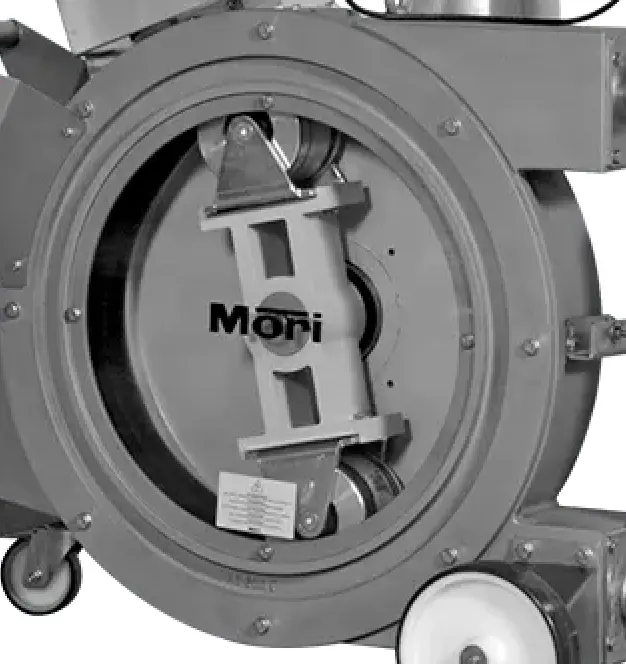
The roller inside the wheel ensures gentle pumping
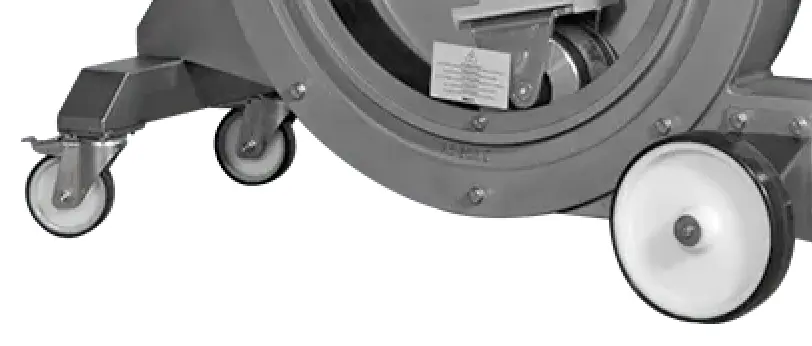
Easy transport of the pump thanks to smooth-running castors