
An Interview with Martin Hugl, Hugl-Wimmer Winery
With roots in viticulture stretching back many generations, the first generation of the family is now united. Sylvia and Martin Hugl have made significant investments to manage their diverse vineyards. The new, highly automated winery offers flexibility. But getting there felt a bit like building an airplane while in free fall!
“As a winegrower today, you face a wide variety of challenges that require a change in mindset,” explains Martin Hugl. The winegrower points to the changing climatic conditions, the effects of which he is feeling both in his own vineyards and with the grapes he buys in: “Earlier ripening, more frequent extreme weather events and the consumer trend towards lighter wines are leading to more concentrated harvest periods.”
“What’s more, our production volumes have increased tenfold since we took over the family business. Today, we produce around 500,000 litres a year. When the grapes are left on the racks waiting to be processed, that doesn’t necessarily make them any better.” This is what prompted the desire for a structural change.
The challenge of volume
“Our clear aim was to be able to take on larger quantities of grapes and press them all at once.” Before the refurbishment in 2014, they were using a pneumatic 2500 press. “With that, we processed up to 4 tonnes of grapes – right up to its capacity. I wanted to move away from that.” They gained an overview by visiting fellow winegrowers. “We looked at a wide variety of sizes, including those used at German wineries. The question was always which configuration would make sense for us. A capacity of 10 tonnes seemed ideal to us.” However, these requirements were at odds with the limited space available in the newly planned hall: “A 10,000-litre tank would have been too big and too long.”
Objective: Flexibility
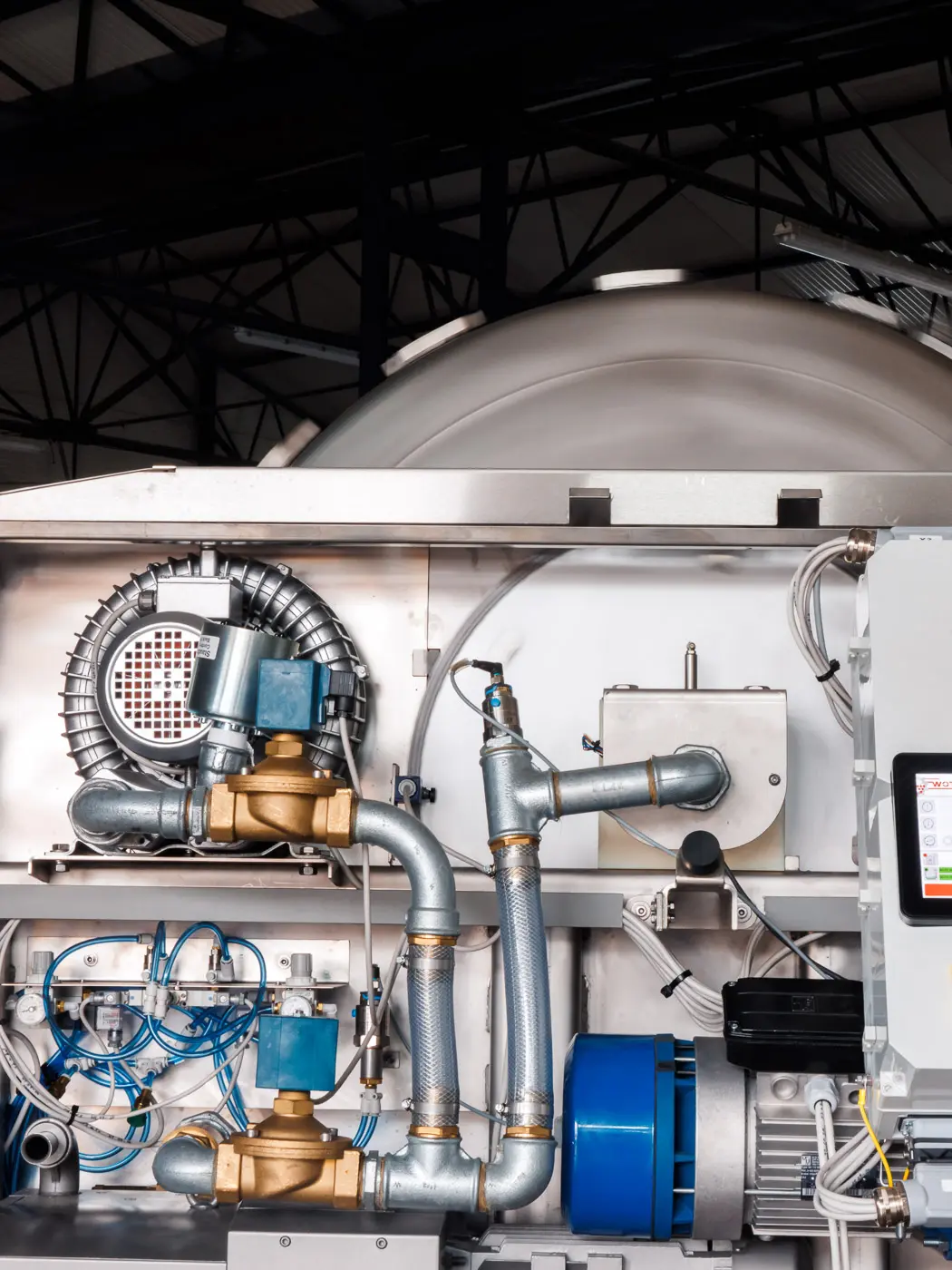
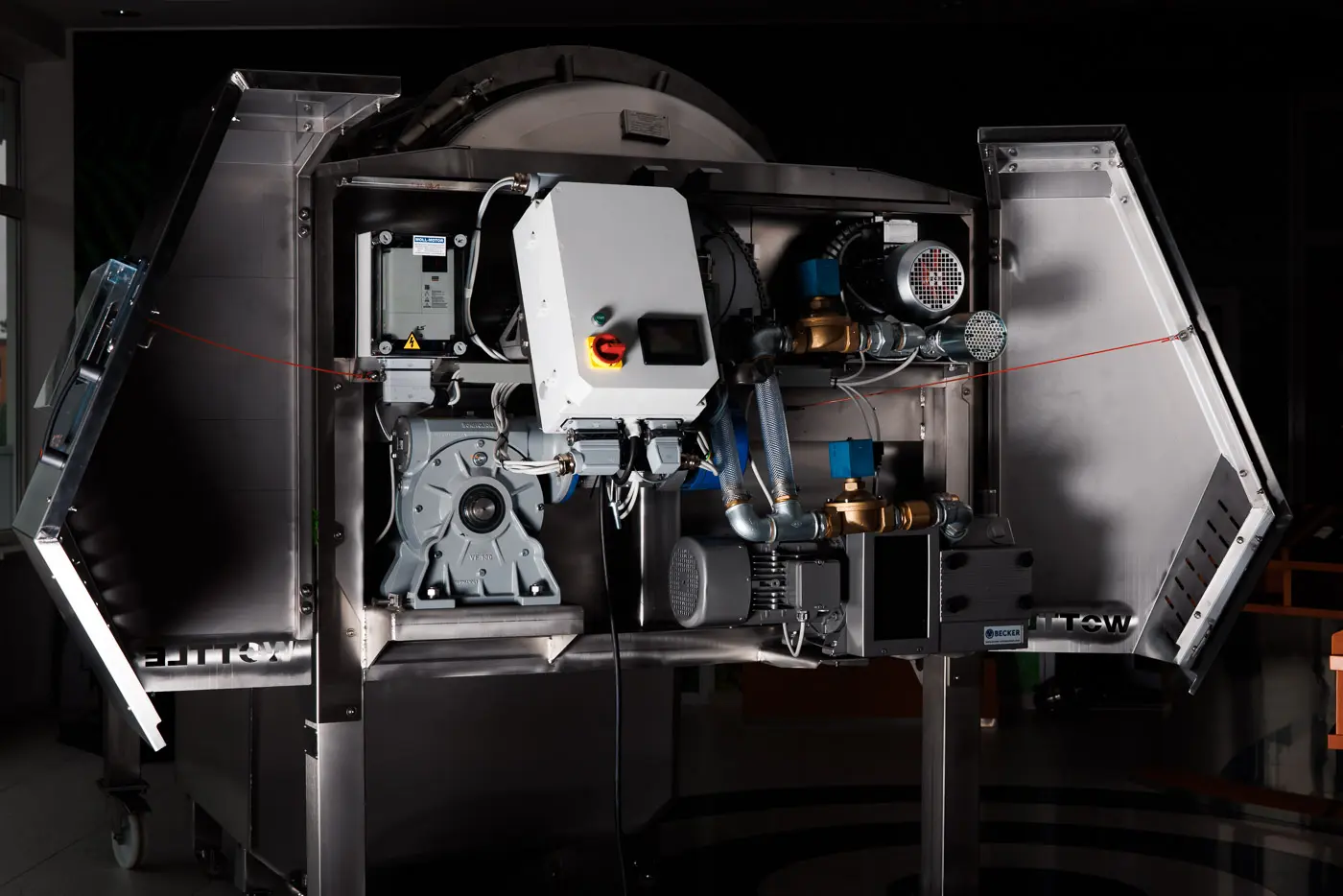
The central element of the new system is the receiving trough: “Unlike before, this allows grapes to be unloaded whilst the press is running.” From here, the grapes are fed into the press via one screw conveyor – or, optionally, via the destemmer. The other, counter-rotating screw conveyor leads to the red wine tanks, where the must ferments before being channelled back into the receiving trough via a chute. There, it is partially de-juiced and then fed into the press. “Completely without any disruptive pumping after fermentation,” says Martin, highlighting the advantages of the technical concept. “We process both hand-picked and machine-harvested grapes equally. The entire process is controlled centrally.”
WOTTLE as a partner
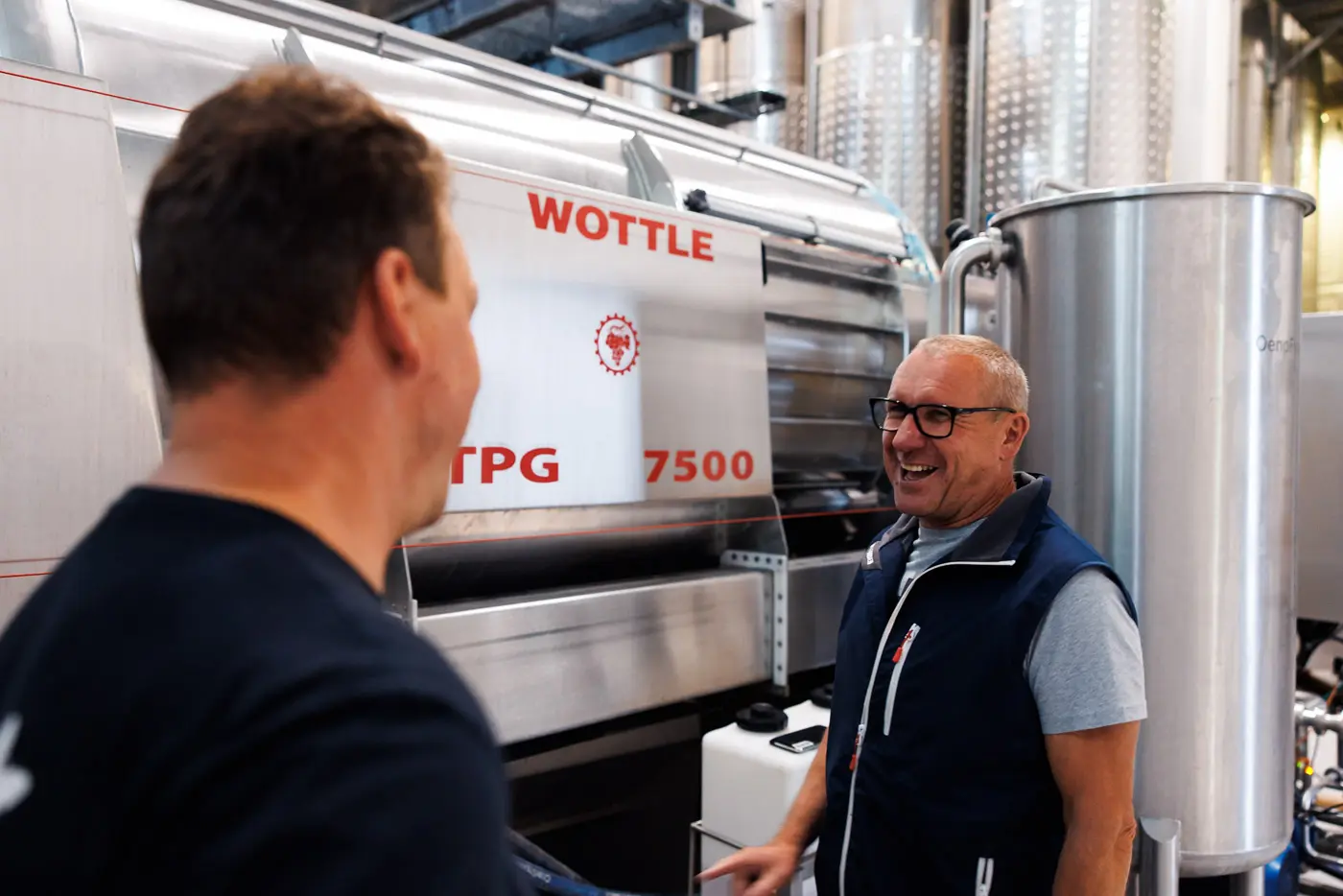
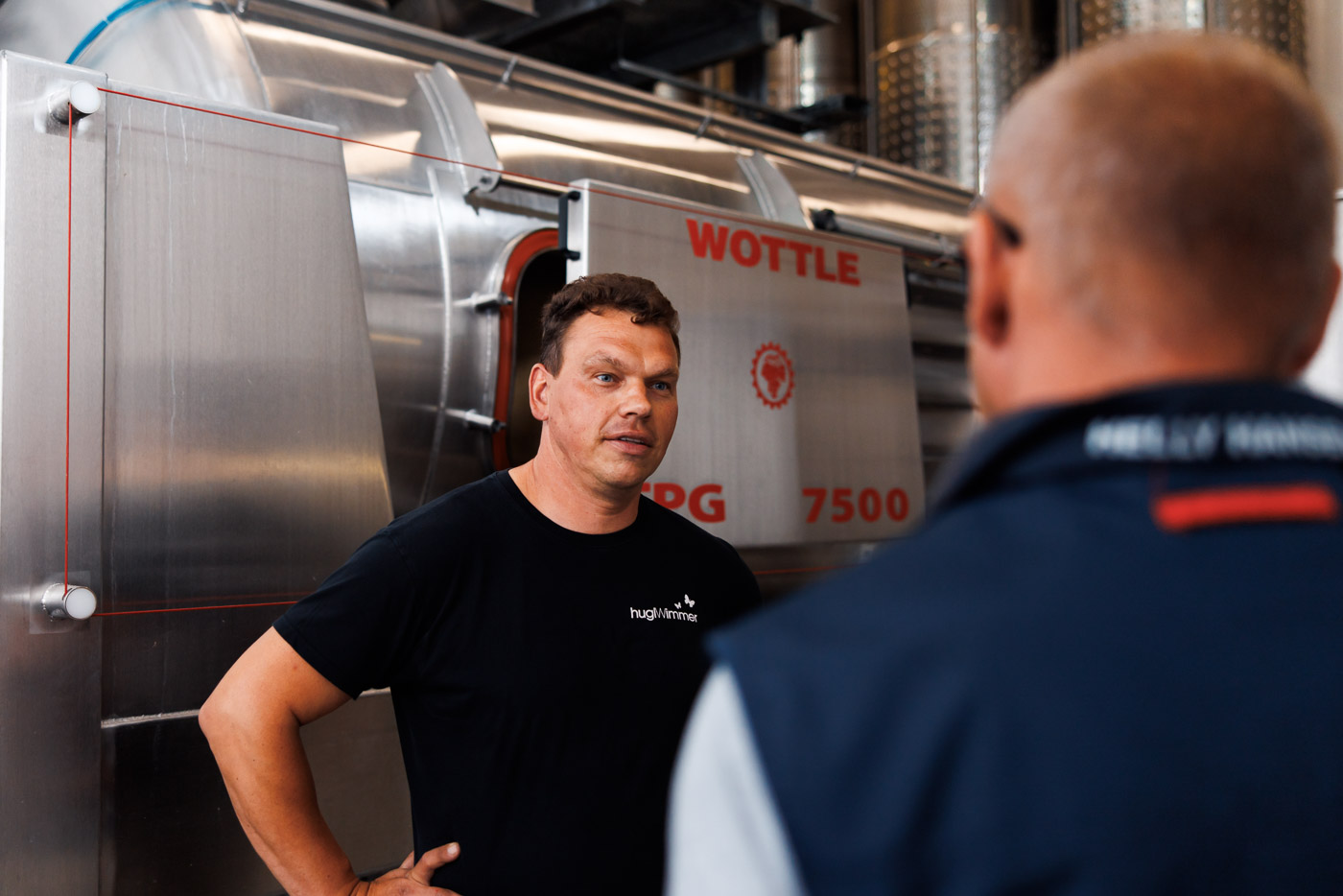
This vision came with specific requirements for the wine press. “For example, we didn’t want central filling; everything had to be aligned with the position of the pomace screw.” The best solution to meet these requirements was developed in collaboration with WOTTLE. “But even though the location just round the corner and the personal trust we have in them are important plus points for us, we still sought a comparison with another supplier. Ultimately, however, WOTTLE also came out on top in terms of value for money.”
Tight schedule
“Building an aeroplane in free fall – yes, that’s more or less how 2014 felt to us,” recalls Martin, thinking back to the laying of the foundations in January, the start of the hangar construction in April and the installation of the technical systems over the course of the summer. “The press turned up in September – we’d basically just connected the electricity and started work!”
‘2014 felt like building an aeroplane whilst in free fall.’
The particularly wet harvest month presented additional challenges. “The grapes had become mushy due to all the rain; the usual pressing parameters simply didn’t work.” Here, too, the proximity to WOTTLE proved to be an advantage: “One phone call, and a few minutes later someone was there to help.”
A good ten years have passed since then. “To date, we’ve completed nearly 900 pressing runs without any major problems. Last year – that is, in 2024 – we even managed six pressing cycles on some days! That’s where the WOTTLE’s reduced cleaning requirements really make a difference.”
Ready for the future
Martin takes an ambivalent view of trends in the wine market: “We do, of course, experiment with different styles of wine – I’ve even tried the much-hyped orange wine – but that’s not the sort of product we produce.” The Hugl-Wimmer winery does not prioritise the specialisation required to build credibility with consumers. “We prefer to focus on our original range; the warmer climate also offers new opportunities in this regard.” "For example, with light, fruity red wines – quite unlike 50 years ago, when our region was still known for wines with a pronounced acidity." And what about alcohol-free wine? Martin isn’t keen on the idea: "That’s purely an industrial product. Grape juice is a much more interesting alcohol-free alternative! A Muscat has a wonderful aroma, but that’s lost through pasteurisation." “We’ll have to look into cold sterilisation, but that would be too much for smaller businesses to handle, both technically and financially.” In any case, the countless control options offered by the WOTTLE press are helping Martin with further development: “Nature sets the broad direction, but we decide which path we want to take!”