

A project press for cheese production
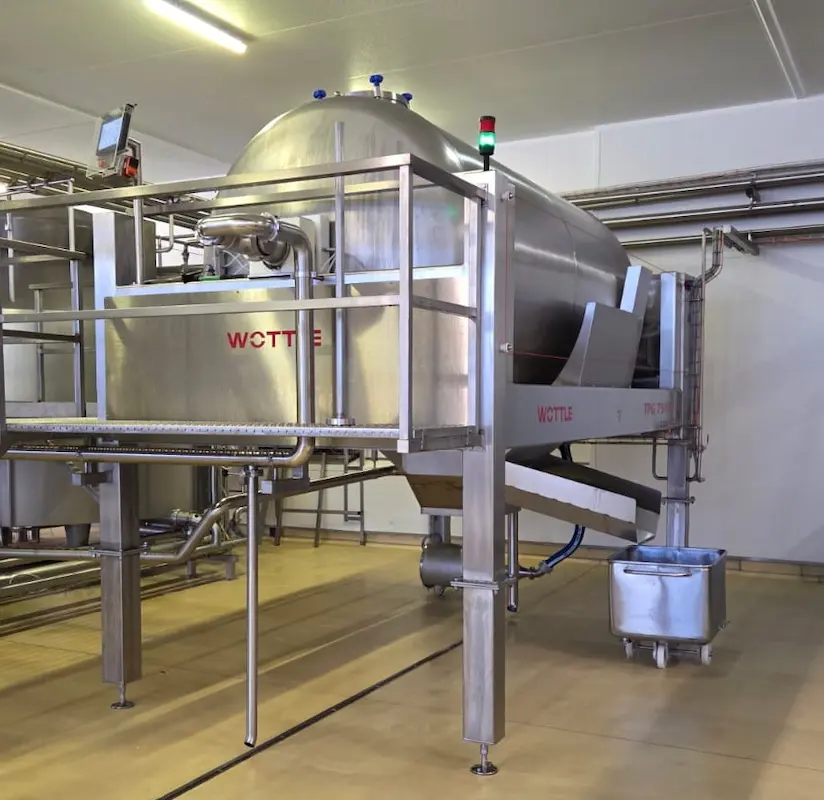
What is a WOTTLE wine press doing at the Obersteirische Molkerei? Quite simply: it presses whey! However, this required a number of technical adaptations, which were implemented specifically for this use case. The result demonstrates the potential of WOTTLE’s pressing technology for other applications as well.
“Extracting whey from cheese has always required a fair bit of manual labour,” explains Siegfried Bärnthaler, operations manager at the Obersteirische Molkerei in Knittelfeld, outlining his motivation for seeking an alternative to conventional hydraulic pressing technology. Until now, the mixture of curd and whey – obtained from skimmed milk using heat and bacterial cultures – had been pressed into curd cheese in a vat. “After each pressing, the curd is turned by hand and pressed again until the required degree of dryness of XY is achieved.” This is a labour-intensive and time-consuming process in the production of the well-known Steirerkäse, which has now become significantly more efficient.
It all began with a question
In the past, the dairy had already carried out trials with fruit presses, but the results were unsatisfactory due to excessively high residual moisture. An online search led Bärnthaler to WOTTLE: “So I asked whether a wine press could also be used to extract juice from cheese whey.” Sounds strange? Not to Thomas Fischer, an engineer who received this enquiry in his role as a technical sales representative at WOTTLE: “When pressing grapes, the waste remains in the press chamber. The product – that is, the grape juice – drips out at the bottom into the vat. So it’s exactly the other way round.” However, that was only the most obvious peculiarity, because: “In our initial trials with a 500-litre press on site, it immediately became clear that the screens also had to be designed differently.”

Picture: Filling the press with cheese whey.
Specially developed whey sieve
Whilst the screens on WOTTLE wine presses are slotted, the hole pattern used in fruit presses seemed ideal for the intended application – though the exact dimensions remained to be determined. “Through joint trials, we arrived at the ideal hole diameter of 1.5 mm,” says Bärnthaler, explaining the desired effects: “On the one hand, it is crucial that the cheese particles remain in the curd as far as possible, rather than draining away with the whey. On the other hand, the screens must not become blocked, nor should any residue remain behind them.” After just a few tests, these objectives were achieved, meaning that the next step was to determine the required size class. “We currently process 12,000 litres of raw material into 1,200 kilos of curd – per day,” says Bärnthaler, summarising the rationale behind the decision to opt for a 7500 press. “But that was just the start of the second phase of our development work.”
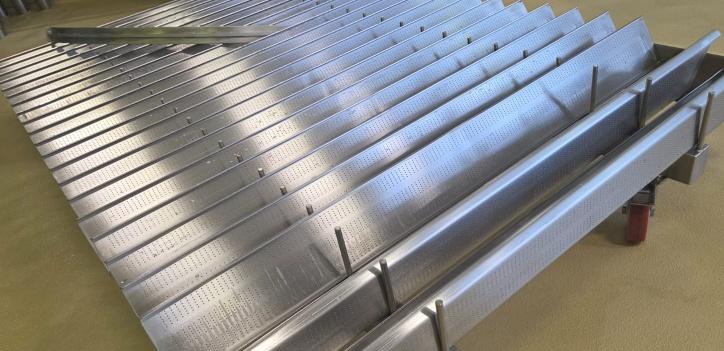
A bespoke perforation pattern was tested for the screens.
Hygiene standards: a major issue
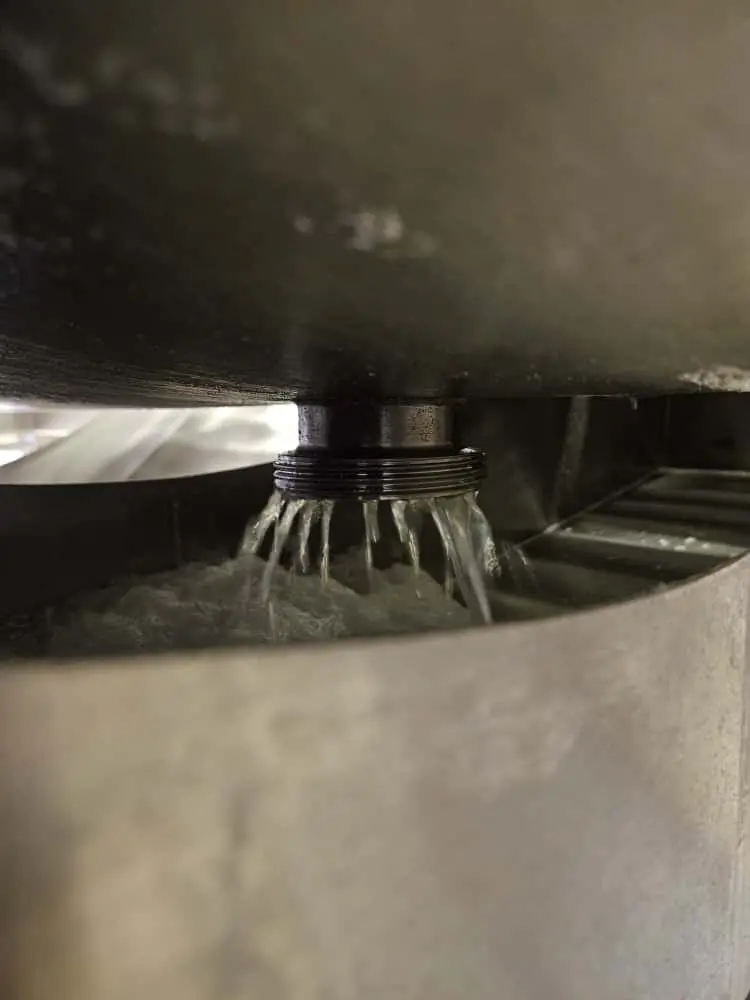
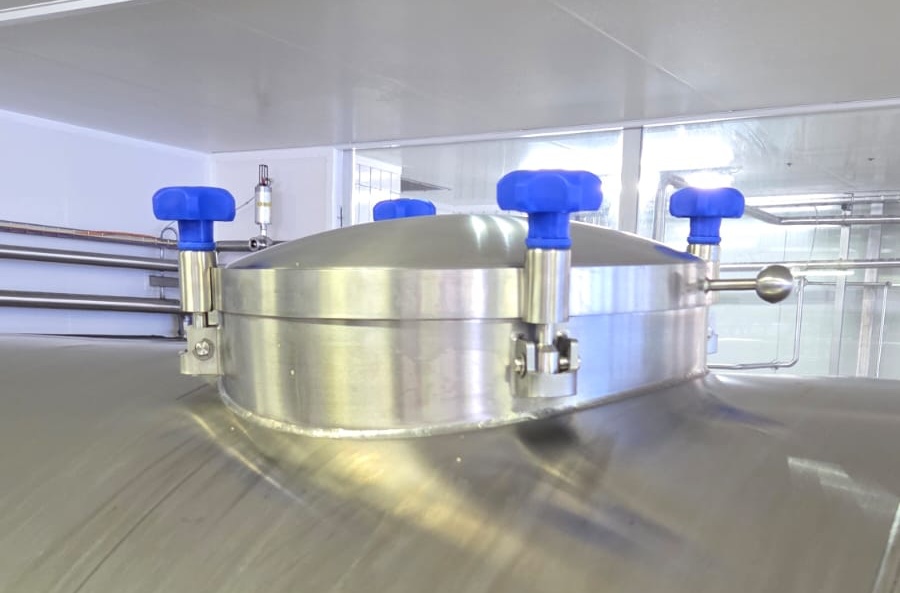
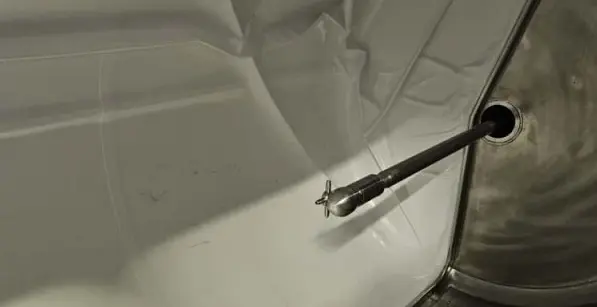
Cleaning-in-Place (CIP) systems are commonplace in the food industry. “After every pressing cycle, the press body must be cleaned using a spray nozzle,” says Bärnthaler, describing the scenario for which a solution had to be found. “Access was provided via the central filling point. What was missing was communication between our control system and the CIP system, so that the press basket would remain in the specified position during cleaning,” explains Fischer.
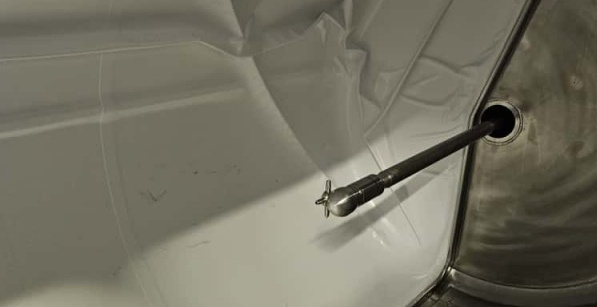
The CIP system is introduced via the central filling point using a lance; cleaning takes place automatically.
However, food hygiene standards required even more far-reaching changes: “The way the membrane was secured in the press basket also had to be adapted to prevent the formation of bacterial hotspots.” After all, the membrane, which inflates using compressed air, is in direct contact with the whey. “The mounting was therefore moved behind the membrane. This meant that an additional opening was required to allow access from the outside for servicing purposes. The cut-out in the membrane material also had to be adjusted accordingly.”
‘The gradual adjustment of pressing pressure and pressing times results in a much more uniform curd mass than before.’
Impressive results
After around a year of development and the first few weeks of live operation, Bärenthaler is satisfied. The target of improving efficiency has been achieved: “In addition to eliminating three manual interventions, we are also saving time in every pressing cycle – around 90 minutes per cycle, which, moreover, runs completely autonomously.” Thanks to the development partnership with WOTTLE, our in-house maintenance team also gained the necessary technical expertise. “Being self-sufficient throughout the year was very important to us!”
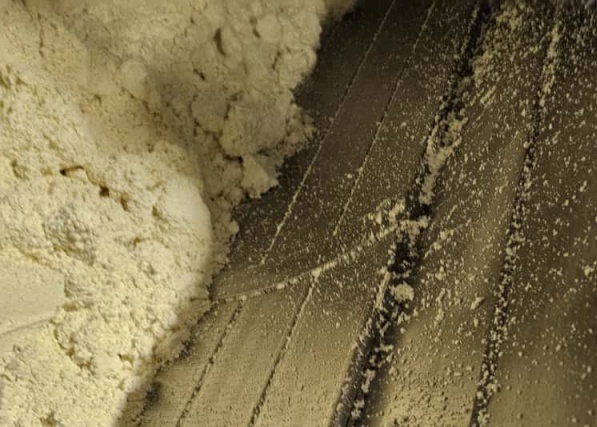
The picture shows the dry curd mixture and the finely perforated sieve.
Last but not least, the quality of the product is also impressive: “The step-by-step adjustment of pressing pressure and pressing times results in a much more uniform curd than before – it will be interesting to see how this affects our Steirerkäse.” All in all, then, a successful cheese study!
Visit the Obersteirische Molkerei